Backyard Ultra Fueling Strategy (What to Eat Each Loop)
- Markos Christodoulides
- Mar 25
- 3 min read
In a backyard ultra, your performance is not limited by your legs.
It’s limited by your ability to fuel, absorb, and sustain energy over time.
You can be in great shape
but without a fueling strategy, your race will end early.
This guide breaks down exactly how to fuel for backyard ultra racing.
Why Fueling Is Everything
After a few hours, your body begins to rely heavily on external energy.
Without proper fueling:
Energy levels drop
Pace slows down
Recovery between loops becomes harder
Mental focus decreases
Eventually, performance collapses.
Backyard ultra is not just a running event.
👉 It’s an energy management system.
The Goal: Consistent Energy Per Loop
Unlike traditional races, backyard ultra gives you short breaks every hour.
This creates a key opportunity:
👉 Refuel every loop.
Your goal is not to “eat when hungry”.
Your goal is to:
Maintain steady carbohydrate intake
Stay hydrated
Keep your gut functioning
Consistency is more important than quantity.
Carbohydrates: Your Primary Fuel
Carbs are the main energy source during long-duration efforts.
Recommended intake:
60–90g carbohydrates per hour
Advanced athletes may tolerate more
This can come from:
Gels
Drink mixes
Solid food (early stages)
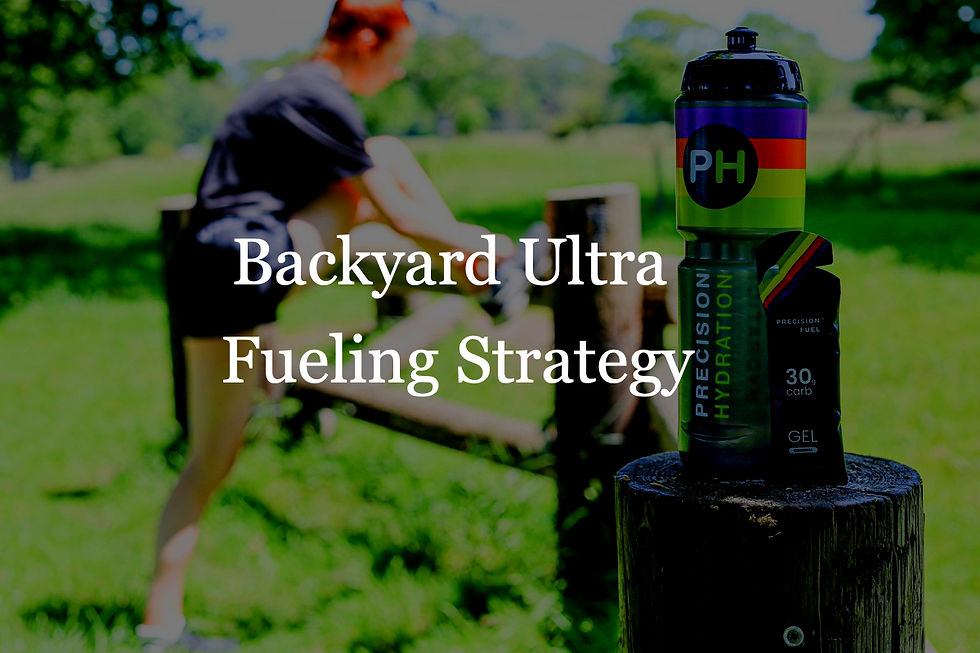
Products like Näak or Precision Fuel & Hydration are often used because they are designed for long-duration endurance.
Hydration Strategy
Dehydration is one of the fastest ways to lose performance.
Key principles:
Drink consistently every loop
Adjust based on weather and sweat rate
Avoid both under-drinking and over-drinking
Signs of poor hydration:
Headaches
Dizziness
Drop in performance
Electrolytes: The Missing Piece
Sweat leads to sodium loss.
Without replacing electrolytes:
Muscle function declines
Cramping risk increases
Fatigue accelerates
Adding electrolytes helps maintain:
Fluid balance
Muscle contraction
Performance stability
Gut Training (Most Overlooked Factor)
Many athletes fail not because they don’t eat…
But because they can’t absorb what they eat.
During a backyard ultra:
Digestion slows down
Appetite drops
Stomach discomfort increases
This is why gut training is critical.
You must practice:
Eating during training
Testing different foods
Finding what your body tolerates
What to Eat Each Loop (Simple Example)
Your fueling should be simple and repeatable.
Example per loop:
Carbohydrate source (gel or drink)
Fluids
Optional small solid food (early hours)
Between loops:
Quick intake
Easy digestion
No experimentation on race day
The goal is speed and efficiency.
Early vs Late Race Strategy
Early Hours:
Mix of solid and liquid fuel
Lower stress on digestion
Later Hours:
Mostly liquid or easy-to-digest carbs
Focus on maintaining intake
Avoid heavy foods
Common Fueling Mistakes
Waiting until you feel hungry
Eating too much at once
Ignoring hydration
Not practicing fueling in training
Trying new foods during the race
These mistakes often lead to:
👉 Energy crashes
👉 Stomach issues
👉 Early race exit
Fueling Is a Skill
Just like running and strength training, fueling must be trained.
You don’t “figure it out” on race day.
You build it through:
Structured training
Consistent practice
Testing strategies
Final Thoughts
In a backyard ultra:
Fitness gets you to the race
Fueling keeps you in the race
The athletes who last longer are not just strong runners.
They are efficient at managing energy over time.
Want a Complete Backyard Ultra System?
Fueling is fully integrated into:
If you want structured training, fueling strategies, and race preparation:
Start there.
Or for personalized support:


Comments